
Comparing the Leading Options for a Small Business Vehicle With Hippo Leasing
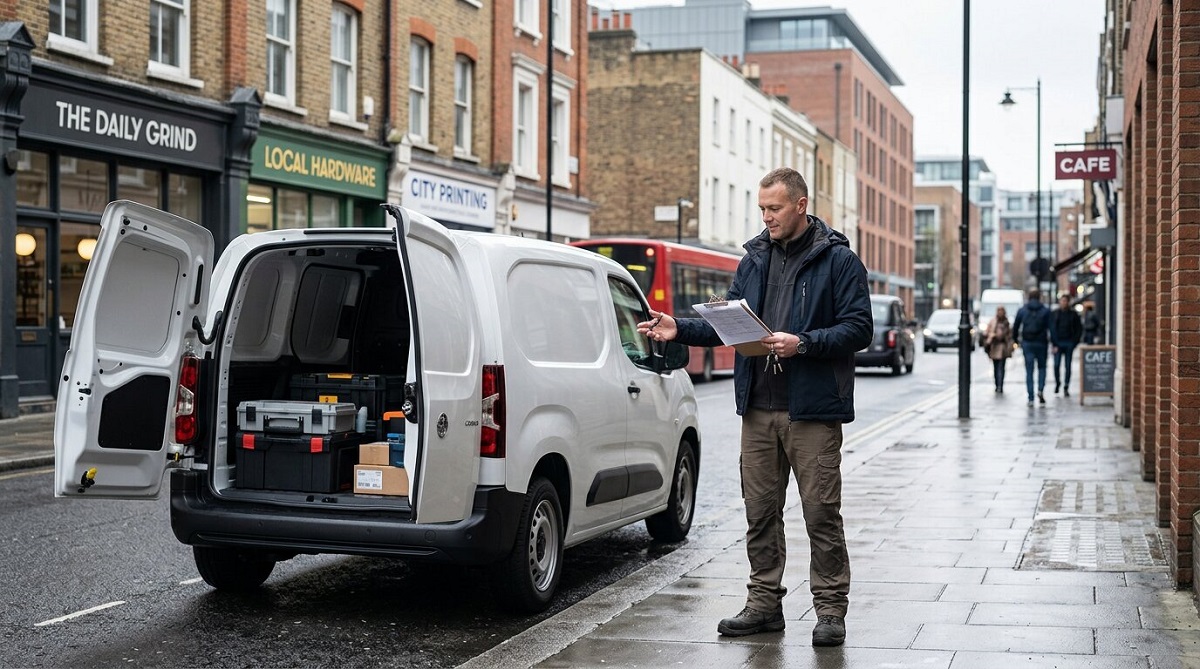
This guide has been put together by Hippo Leasing, the UK's small business leasing experts, to help you find the right commercial vehicle for your operation without the guesswork.
Choosing the right vehicle for your small business is one of those decisions that quietly shapes how efficiently you operate every single day. Whether you are carrying tools to a job, delivering goods to customers, or transporting equipment across the country, the van or pickup you drive becomes part of your working life in a very real sense. Get it right, and it simply fades into the background, doing its job. Get it wrong, and you notice it in cramped load areas, awkward customer impressions, and running costs that do not quite add up.
The good news is that the market for small business vehicles in the UK has never been stronger. There are options to suit virtually every trade, every budget, and every set of requirements, from the compact and city-friendly to the large-scale and long-haul. What follows is a plain-speaking comparison of seven of the most popular choices currently available through Hippo Leasing, so you can weigh them up side by side and find the one that genuinely fits your business.
The Vehicles at a Glance:
- Vauxhall Combo Cargo
- Mercedes-Benz Sprinter
- Isuzu D-Max Diesel
- Ford Transit (Medium Roof)
- Renault Master (Luton)
- Citroën Berlingo
- Volkswagen Transporter T6.1
The Vauxhall Combo Cargo: Compact, Clever, and Surprisingly Capable
A Small Van That Punches Well Above Its Weight Class
The Vauxhall Combo Cargo might not be the largest vehicle on this list, but it is one of the most thoughtfully designed. Its compact external dimensions make it genuinely easy to navigate in busy urban environments, tight car parks, and narrow residential streets, which is a genuine advantage for businesses that spend the majority of their working day in towns and cities. Despite its modest footprint, Vauxhall has managed to engineer a load area that feels meaningfully spacious once you are inside it.
The standard load length on the Combo Cargo reaches up to 1.8 metres, and with the fold-flat front passenger seat, longer items can be accommodated without any awkward manoeuvring. The load volume sits at around 4.4 cubic metres in the extended-wheelbase variant, which is respectable for a vehicle in this class. Payload capacity is in the region of 800 to 1,000 kg, depending on the specification chosen, making it suitable for a wide range of everyday business loads.
Drivers tend to appreciate the Combo Cargo's comfortable and well-finished cabin. The infotainment system is modern and responsive, and the driving position feels more car-like than van-like, which reduces fatigue on longer days. Fuel efficiency is another strong suit, with the diesel variants offering real-world economy figures that keep running costs manageable, particularly for businesses clocking up significant mileage across the working week.
The Combo Cargo is arguably at its best in the hands of a small courier operation, a local florist, or a mobile beauty or wellness professional who needs a reliable, easy-to-drive vehicle for daily client visits. It is clean, presentable, and easy to park, which matters when you are turning up to people's homes or businesses. For any small business built on regular, lighter-load deliveries in an urban setting, the Combo Cargo deserves serious consideration.
The Mercedes-Benz Sprinter: The Long-Distance Professional
Premium Build Quality for Businesses That Cannot Afford Downtime
The Mercedes-Benz Sprinter occupies a very particular position in the commercial vehicle market: it is the van that professionals tend to choose when reliability and reputation matter as much as practicality. It has been one of the best-selling large panel vans in the UK for decades, and there is a reason that longevity persists. The Sprinter is a genuinely well-engineered vehicle, available in an extensive range of body configurations, roof heights, and wheelbases that allow it to be tailored to almost any business requirement.
In terms of load capacity, the Sprinter offers up to 17 cubic metres of cargo space in its largest configuration, with payloads reaching up to around 1,800 kg. The medium and high-roof variants are especially popular among trades that carry tall equipment or need to work standing upright inside the van, such as electrical contractors or plumbing and heating engineers. The rear load doors can be specified with a range of opening angles, and the interior is well-suited to racking and shelving fitouts.
The Sprinter's driving dynamics are notably refined for a large van. The modern diesel engines are powerful enough to handle fully loaded motorway runs with ease, and the nine-speed automatic gearbox available on higher specifications makes longer journeys genuinely comfortable. Mercedes-Benz's MBUX infotainment system is available on newer models, bringing a level of cabin technology that would not look out of place in a passenger car.
For a small business in the building trades, refrigerated transport, or specialist equipment hire, the Sprinter sends a clear professional signal to clients and colleagues alike. It is the kind of vehicle that supports a growing business in its aspirations, not just its logistics. Leasing a Sprinter through Hippo Leasing gives you access to that reputation without the large capital outlay of an outright purchase.
The Isuzu D-Max Diesel: Rugged, Reliable, and Ready for Anything
A Pick-Up Truck Built for the Businesses That Work Off the Beaten Track
The Isuzu D-Max sits slightly apart from the rest of this list, because it is not a panel van. It is a double-cab pick-up truck, and for certain businesses, that distinction is everything. The D-Max has built a loyal following among tradespeople, agricultural businesses, and outdoor professionals who need a vehicle that can genuinely cope with challenging terrain, heavy towing, and the kind of daily abuse that would leave lesser vehicles showing their age far too quickly.
The D-Max is powered by a 1.9-litre diesel engine producing around 163 bhp, with a towing capacity of up to 3,500 kg when properly equipped. That places it firmly in the territory of businesses that regularly tow trailers, livestock transporters, or plant machinery. The payload in the bed sits at around 1,000 kg, and the open load area, though exposed to the elements unless a tonneau cover or hardtop canopy is specified, offers flexibility that a fully enclosed van simply cannot match for bulky or awkwardly shaped cargo.
One of the D-Max's strongest selling points is its four-wheel-drive capability. The shift-on-the-fly system allows drivers to move between two-wheel and four-wheel drive without stopping, which is a practical advantage on mixed-surface working days. The interior has improved considerably in recent generations and now offers a comfortable and well-equipped environment, with decent connectivity features and supportive seats for long days on the road.
The D-Max is a natural fit for a landscape gardening business, a rural pest control operator, or a small agricultural contractor. It handles the farmyard, the building site, and the A-road with equal composure, and its distinctive, purposeful appearance gives it a working-vehicle credibility that resonates in industries where practical capability is what clients respect most. For businesses that genuinely need to go off-road, the D-Max is the obvious choice on this list.
The Ford Transit (Medium Roof): The Nation's Favourite for Good Reason
Britain's Best-Selling Van and a Benchmark for the Sector
There is a reason the Ford Transit has become something close to a generic term for a large van in the United Kingdom. It has been the country's top-selling commercial vehicle for the better part of six decades, and each successive generation has refined the formula without losing what made it popular in the first place. The medium-roof variant in particular strikes a balance that appeals to a wide range of trades and businesses, offering ample headroom inside the load area without the visual bulk of a high-roof configuration.
The Transit Medium Roof typically offers a load volume of around 8.3 cubic metres, with a payload capacity in the region of 1,000 to 1,400 kg depending on specification. The load length is generous, and the wide-opening rear doors, combined with a low loading sill, make it a practical vehicle for regular loading and unloading throughout the working day. Ford's Custom Connect system provides useful connectivity features for fleet management and driver assistance, which is increasingly relevant even for smaller operators.
The engine lineup on the current Transit centres on a 2.0-litre EcoBlue diesel available in multiple power outputs, and the more powerful variants are well-suited to motorway work when the van is loaded. Ford has also invested heavily in the Transit's safety technology, with automatic emergency braking, lane-keeping assist, and driver alert systems available depending on the trim level selected. For a business concerned about duty-of-care obligations for its drivers, those features are worth noting.
The Transit Medium Roof is, perhaps unsurprisingly, a strong choice for almost any trade business with a mid-to-large range of tools and materials to carry. It is particularly well-suited to a small removals company or a multi-trade contractor who needs the flexibility to carry varied loads without committing to the full scale of a high-roof large van. The parts and servicing network is extensive across the UK, which brings meaningful peace of mind for any business that cannot afford to be without its vehicle.
The Renault Master (Luton): Maximum Capacity for Maximum Ambition
When Volume Is the Priority, This Configuration Delivers
The Renault Master in its Luton body configuration is a different proposition from a standard panel van, and it is worth understanding what that means in practice. A Luton body is a box-shaped, fixed body that extends over the cab of the vehicle, creating a substantially larger carrying volume than the van's chassis alone would provide. That overhanging section, known as the luton box, is typically where you will find a folded mattress, a stack of flat-pack furniture, or a collection of large retail deliveries that need protection from the elements.
The Master Luton typically offers a load volume in the range of 22 cubic metres, with a payload of around 1,200 kg. The loading access is via a full-width tail-lift on many specifications, which makes it significantly easier for one or two-person operations to load and unload heavy items without requiring additional help. The cab itself is comfortable and practical, with good visibility and a modern infotainment interface that makes long driving days more manageable.
The Master's 2.3-litre diesel engine has a long track record of reliability in commercial applications, and the available power outputs are well-matched to the vehicle's working demands. Renault's commercial vehicle warranty and service network in the UK is well-established, and maintenance packages can be built into a lease agreement to keep costs predictable throughout the contract term. The Master Luton's larger footprint does require some adjustment in terms of parking and urban navigation, but for businesses that are primarily on A-roads and in commercial areas, this is rarely an issue.
For a small house removal company, a furniture delivery service, or a market stall operator moving significant quantities of stock, the Renault Master Luton is a compelling choice. It offers the kind of volume that makes the difference between completing a job in one trip and needing two, which in a small business translates directly into time and cost savings. It is a serious working vehicle, and it rewards businesses that treat it as such.
The Citroën Berlingo: The Everyday Workhorse That Drivers Love Coming Back To
Practical, Economical, and Effortless to Live With Day After Day
The Citroën Berlingo occupies an interesting position in the small van market, in that it manages to feel both unpretentious and genuinely well-thought-out at the same time. It has gone through several generations of development, and the current version benefits from modern platform engineering that it shares with the Vauxhall Combo Cargo and Peugeot Partner, giving it a strong foundation without sacrificing the Berlingo's own character. For businesses looking for a compact van that simply gets on with the job, it is hard to overlook.
The Berlingo's load area offers up to 4.4 cubic metres of cargo space in the XL version, with a payload of up to around 800 kg. The double sliding side doors are a genuinely useful feature for businesses that frequently load from the kerbside, particularly in urban environments where rear access is limited. The Modutop roof panel, which replaces the traditional solid roof above the cabin with a storage module and additional skylights, is a clever touch that maximises usable space without increasing the vehicle's external dimensions.
Fuel economy is one of the Berlingo's more quietly impressive qualities. The 1.5-litre diesel engine available in the current range is efficient and responsive, and real-world consumption figures are consistently competitive in its class. The driving experience is relaxed and easy to adapt to, which makes it a good choice for businesses where multiple employees might be using the same vehicle across different shifts or working days.
The Berlingo is particularly well-suited to a small catering or food delivery business, a mobile dog groomer, or an independent tradesperson in a discipline such as locksmithing or small appliance repair, where the daily load is relatively modest but the vehicle is expected to work hard and present well. It is a van that earns respect not through dramatic features but through consistent, reliable performance across the working week.
The Volkswagen Transporter T6.1: Where Premium Meets Practicality
A Van That Elevates the Businesses That Choose to Drive It
The Volkswagen Transporter T6.1 is widely regarded as one of the most refined and well-built vans in its class, and that reputation is earned rather than assumed. The T6.1 is the latest iteration of a lineage stretching back decades, and Volkswagen has continued to refine the formula with each update. The result is a medium-sized panel van that drives more like a high-quality family car than a commercial vehicle, with a level of interior finish and build quality that stands out noticeably in its segment.
In practical terms, the Transporter offers a load volume of up to 5.8 cubic metres in the panel van body style, with a payload of around 800 to 1,000 kg depending on configuration. The load area is well-proportioned and easy to fit out with racking systems, making it popular among tradespeople who spend time working from the van rather than simply transporting goods in it. The sliding side door and wide rear barn doors give good access from multiple angles, which speeds up the loading and unloading process considerably.
The T6.1's cabin is where Volkswagen really distinguishes itself from the competition. The digital cockpit display, the high-quality trim materials, and the refined steering and suspension setup all contribute to a driving experience that reduces fatigue and, perhaps more importantly, makes a strong impression on clients. For a small business where the van is driven to customer premises regularly, the Transporter sends a clear signal about the standards the business holds itself to.
The Volkswagen Transporter T6.1 is an excellent fit for a premium trade contractor, such as an interior designer, a specialist installer of high-end kitchen or bathroom fittings, or a luxury event planning business that needs to move equipment in a vehicle that reflects its brand values. The slightly higher lease cost compared to some alternatives on this list is offset by the vehicle's image, its residual reliability, and the sense of pride that most drivers feel getting behind the wheel. For businesses where presentation is part of the product, it is worth every penny.
Finding the Right Match for Your Business: Final Thoughts
There is no single best van for every small business, and that is rather the point of a guide like this. The Citroën Berlingo and Vauxhall Combo Cargo are excellent choices if compact city-friendly practicality is the priority. The Ford Transit and Mercedes-Benz Sprinter offer the kind of versatile capacity and professional credibility that makes them perennial favourites across the trades. The Renault Master Luton steps in when sheer volume is the deciding factor. The Isuzu D-Max stands alone for businesses that need genuine off-road capability and towing strength, while the Volkswagen Transporter T6.1 rewards those for whom quality and presentation are as important as the spec sheet. Whichever direction your business pulls you, Hippo Leasing can help you get into the right vehicle on terms that work for your budget and your operation.
Frequently Asked Questions About Van Leasing for Small Businesses
What exactly is van leasing and how does it work?
Van leasing, sometimes referred to as contract hire, involves making a fixed monthly payment to use a vehicle for an agreed period, usually between two and five years. When the contract ends, the vehicle is returned. You never own it, but you also never have to worry about depreciation eating into its value, and you will always be driving a relatively new and well-maintained vehicle. Hippo Leasing arranges contract hire agreements for businesses of all sizes throughout the UK.
What condition does the van need to be in when I return it at the end of the lease?
The vehicle is expected to be returned in a condition consistent with its age and mileage, in line with the BVRLA's Fair Wear and Tear guidelines. Minor scuffs and light surface marks are generally accepted as part of normal use, but damage beyond that standard may result in a charge. It is worth familiarising yourself with those guidelines before the contract ends, and many businesses find it cost-effective to have the vehicle professionally valeted and any minor bodywork addressed before the return inspection. Hippo Leasing can walk you through what to expect well in advance of your handback date.
Can I lease more than one van if I need a small fleet?
Absolutely. Hippo Leasing works with businesses operating anything from a single vehicle to a growing fleet, and taking on multiple vehicles through the same provider can simplify administration considerably. Having all your lease agreements in one place means unified renewal dates, a single point of contact for queries, and the potential for more favourable terms as your fleet grows. Whether you need two vans of the same model or a mixed selection of vehicles for different roles within the business, Hippo Leasing can structure a solution that keeps things straightforward.
What does a typical business van lease actually include?
A standard contract hire agreement covers the vehicle itself, road tax for the full duration of the lease, and breakdown cover. From there, you can add a fully maintained package that covers servicing, tyres, and MOTs, as well as optional extras such as GAP insurance and relief vehicle cover. Hippo Leasing can put together a package that suits your specific business requirements and budget.
Is leasing a van realistic for a newer or recently established business?
It can be, yes. Businesses in the earlier stages of trading may be asked to provide additional financial information or a personal guarantee, but leasing is often more accessible than applying for a business loan to fund an outright purchase. Hippo Leasing works with businesses at all stages of their journey and can advise on the most suitable approach based on your trading history and credit position.
What are the main advantages of leasing a van rather than buying one outright?
The two biggest advantages are cash flow and predictability. Leasing removes the need for a significant upfront capital outlay, which keeps working capital available for the business. Monthly payments are fixed, so budgeting is straightforward. Road tax is typically included in the arrangement, and a fully maintained lease takes servicing and tyres off your plate as well. There is also no risk of being left holding a depreciating asset when you are ready to upgrade.
Hippo Leasing is a UK-based commercial vehicle leasing specialist that helps small and medium-sized businesses secure the right vehicles at competitive monthly rates. To receive a no-obligation quote on any of the models featured in this article, visit hippoleasing.co.uk or get in touch with the team directly by phone.